LEARNING MACHINES
〰️
LEARNING MACHINES 〰️
Re-thinking Accessible Art Education for Today’s Computational Turn
WORKSHOPS & COLLABORATIONS
-
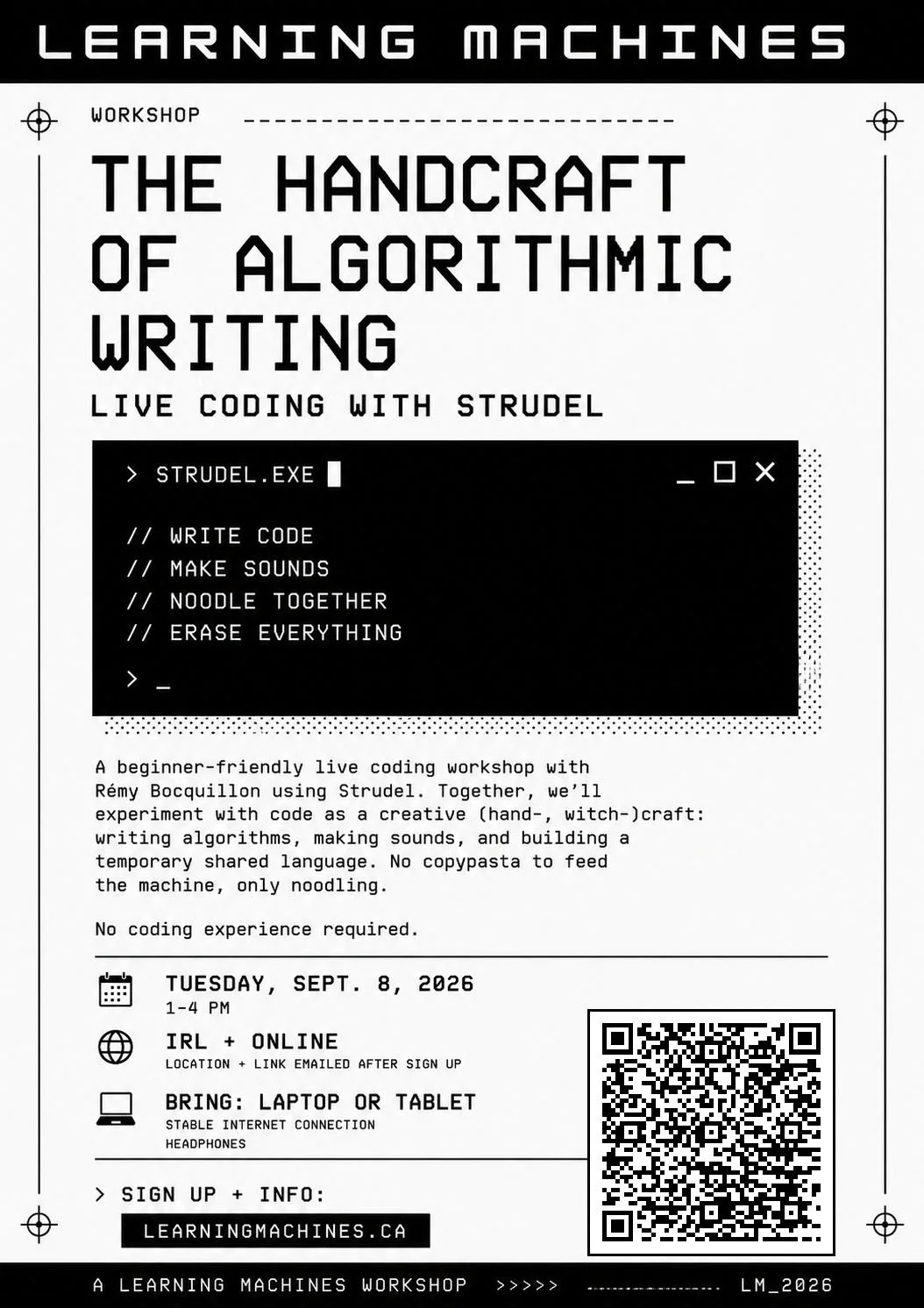
LEARNING MACHINES x Rémy BOCQUILLON
-
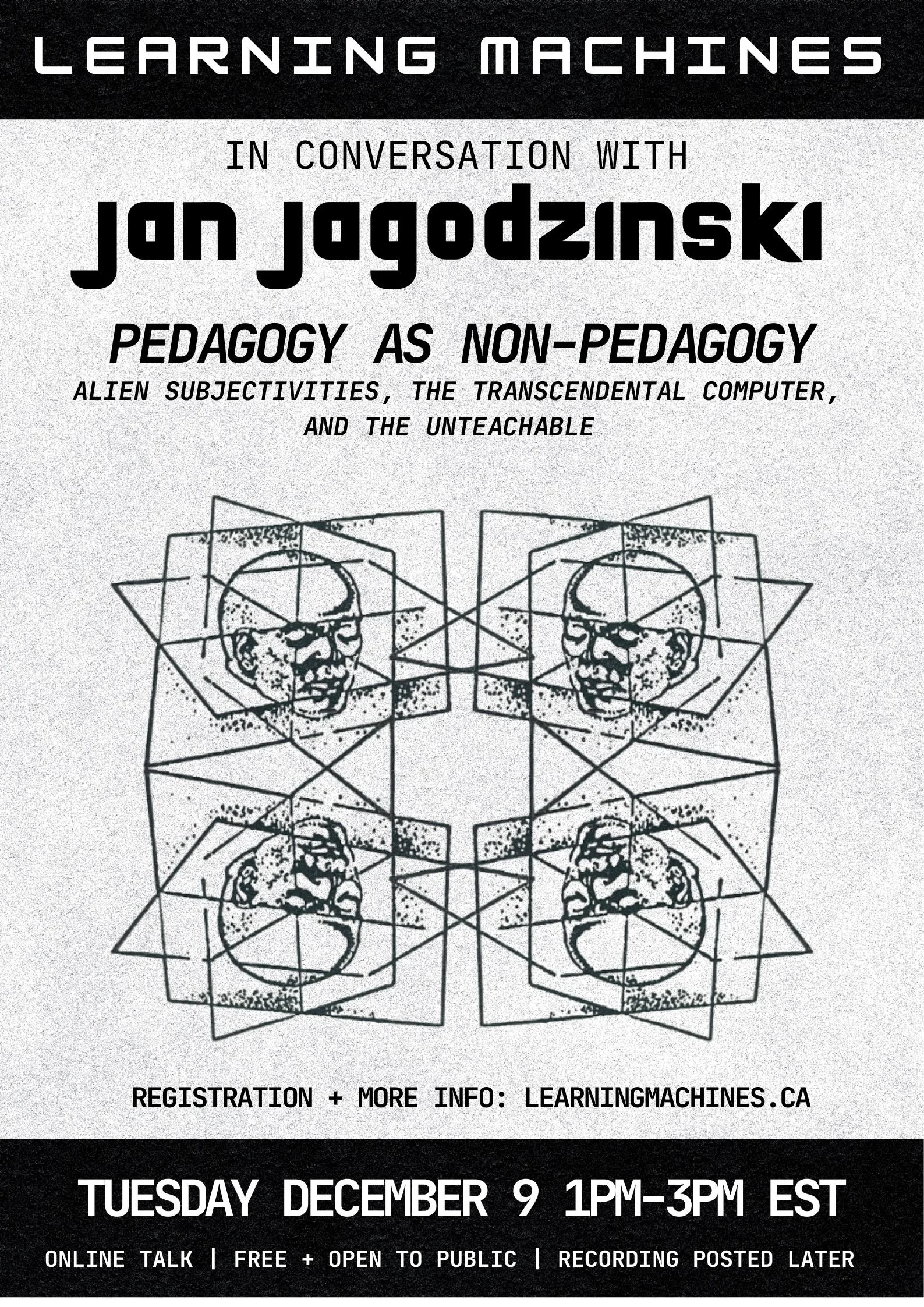
Learning Machines x jan jagodzinski: Pedagogy as Non-Pedagogy
-

Tender Circuits: Scores for Artificial Intimacies - Workshop @ Karlsruhe University
-

Artificial Intimacies: Figuring Care in the Age of AI - jessie beier ONLINE TALK
-

Acfas 2025┃Boîte noire, IA et encodage
-

Machinic Encounters @ MUTEK Forum
-

Forthcoming Chapter: Learning Machines in Rewiring AI and Edcation
-

Presentation at ACFAS 2025
RESIDENCIES &
rESEARCH PROJECTS
LIVE FROM THE BLACK BOX!
〰️
LIVE FROM THE BLACK BOX! 〰️
A DIY, live-streamed glimpse into the black boxes of AI computation, scientific theory, experimental theatre, and weird pedagogies.
Algorithmic Instructions for Analogue Circuits
〰️
Algorithmic Instructions for Analogue Circuits 〰️
A live, public experiment in machinic pedagogies, where Learning Machines gathered with members of the public to activate a live pedagogical circuit across a series of experimental stations.
We are learning machines, des machines à apprendre, des machines apprenantes.
Learning Machines is a research-creation collective based in the Department of Art Education at Concordia University (Tiohtià:ke/Montréal). Together, we experiment with what pedagogy might become when humans and machines think, feel, and fabulate together.
Our work unfolds through collective experimentation, public residencies, performance, speculative media, and collaborative workshops. From the black-boxed logics of AI to the recursive feedback loops of algorithmic instruction, we ask:
What can today’s “learning machines” teach us about accessible art education?
How might thinking-making with algorithms, computational tools, artificial intelligence(s), and machine learning protocols reorient questions of accessibility in art education?
What can today’s “learning machines” teach us about thinking, intelligence, artificiality, embodied cognition, techno-human relations, and, ultimately, learning?
And, what possibilities, but also limitations, do creative and collective modes of research offer in navigating the questions raised by today’s “learning machines”?